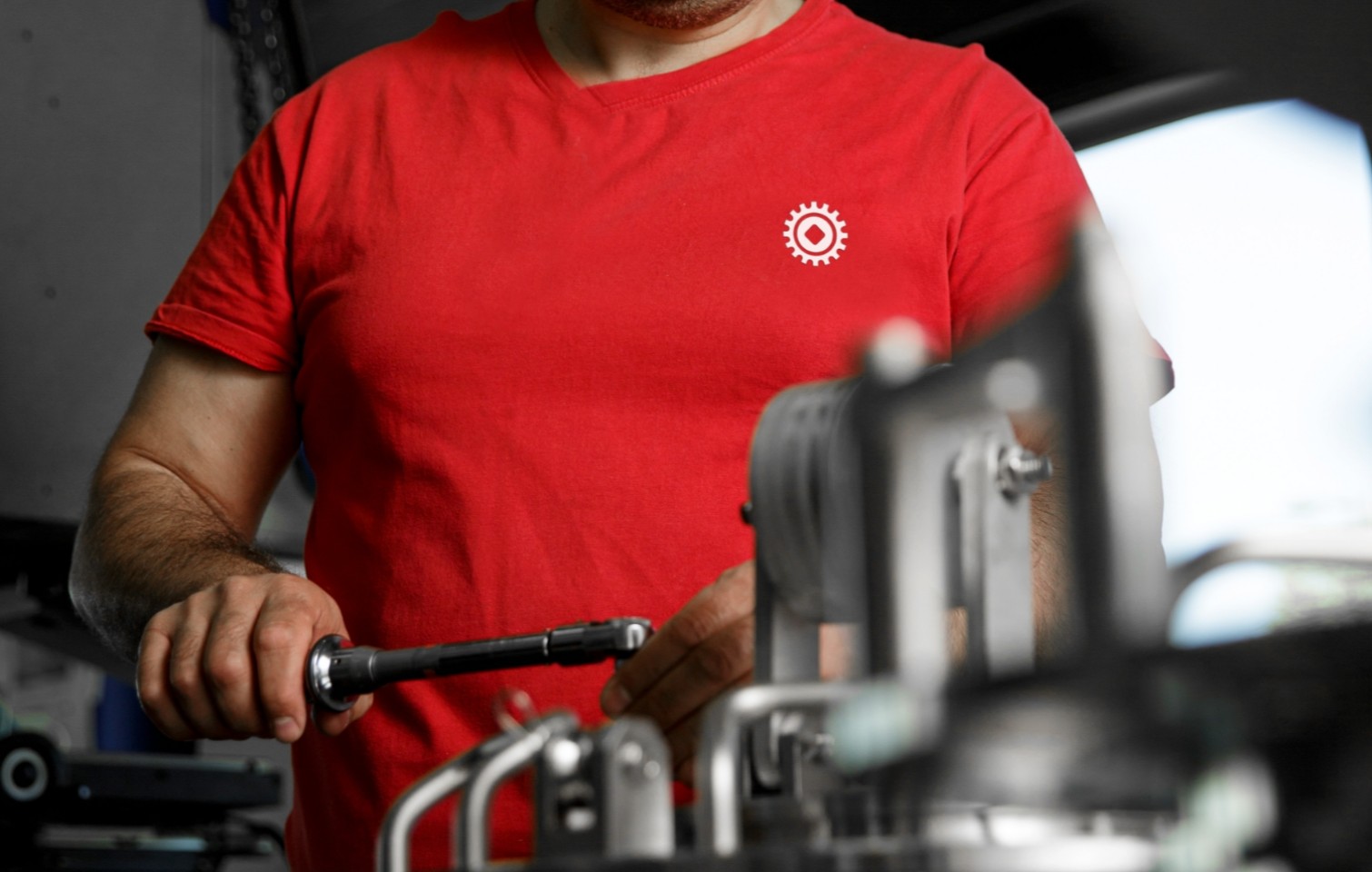
This is our promise to you. By placing all our know-how at the heart of our reliable, powerful and precise tools. For you, maintenance technicians, mechanics, plumbers, heating engineers, electricians, carpenters...
MOB, reliable tools for over 100 years.

Mob is living history. A story born in 1920 in the heart of the Forges de la Loire.
A family history that combines new techniques and technologies with the precious blacksmith know-how held by the century-old company.
An authentic and modern story.
Mob is a story of values and commitments. From the first hammers to the latest innovations made in France, Mob embodies the tool of the expert which, combined with the dexterity of the technicians, leads to the success of its operations.
Because each mission is directed and totally controlled. Because we must prevent and cure. Mob is your reference from which you get the best. Your best ally.
You have the tool. You have the power!
Ancestral know-how & new technologies, the balance point
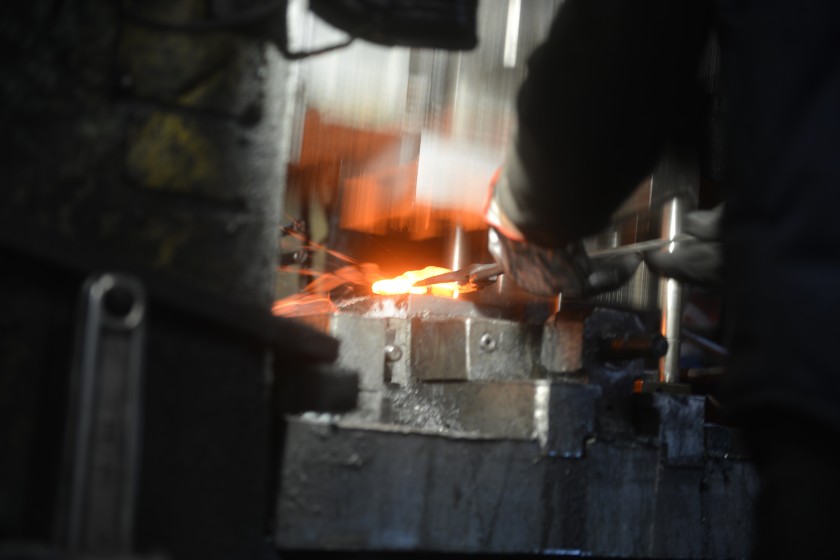
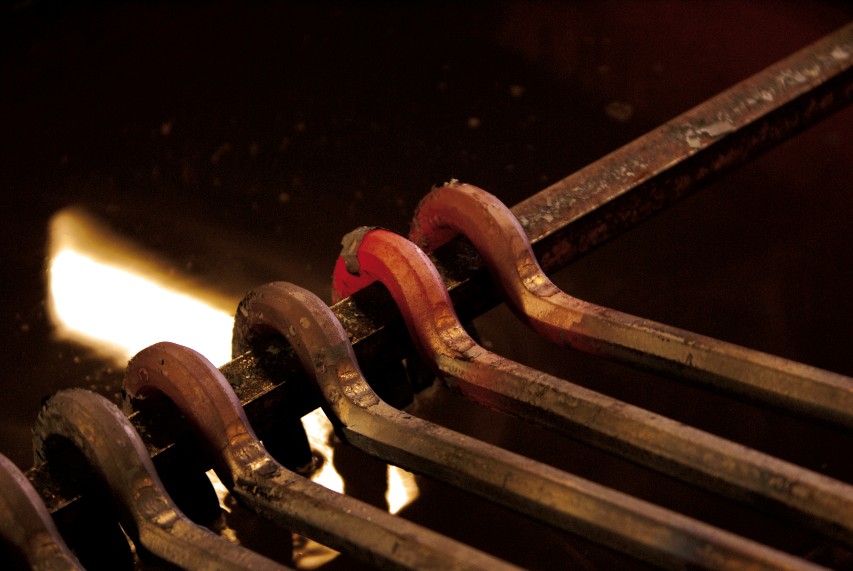
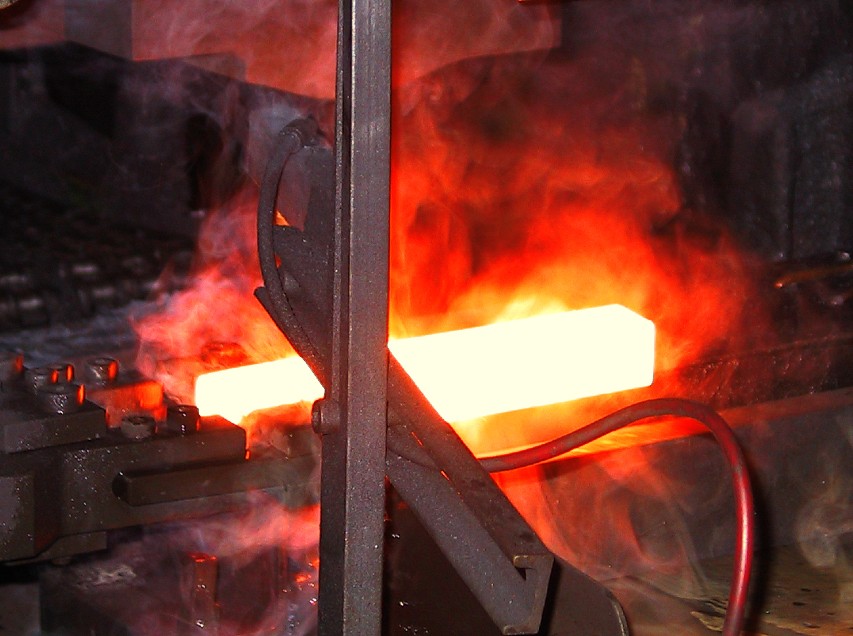
Born blacksmiths, we remain attached to this ancestral know-how. We maintain the work of power hammers in France thanks to companionship. We are proud to have this valuable expertise in forging, quenching and tempering, which judiciously combined with the quality of our steels, give power, reliability and safety to our forged tools.
Today, we manage to combine these techniques with new techniques and technologies that allow us to develop our innovations, improve performance on our lines and for our tools.
A technical force, sharp and controlled.
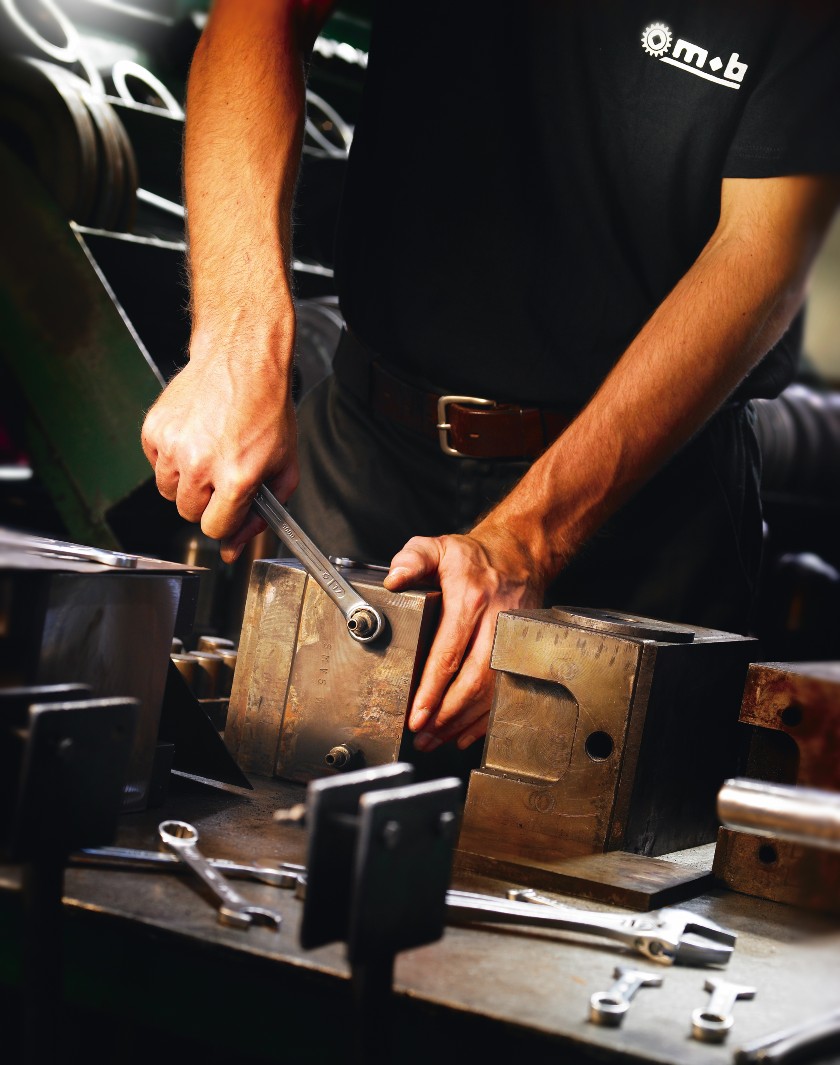
If we seek to find the right balance in our materials and our manufacturing techniques, it is at the service of the quality of our tools.
We work on the precision of the angles of each hammer, their weight, their center of gravity, their rebound. We question ourselves on the relevance of the designs, shapes, equipment that you use on a daily basis.
We innovate in the design of our handles, with the Carbon handle made of 4 materials, including a combination of fiberglass and carbon fibers used for Formula 1 cars or racing catamarans. We work on their ergonomics, their safety with a fitting by hydraulic machine with unit force sensor. To gain in tearing performance, go well beyond the standards and make it our MOB trademark.
Also and for each of our tools and equipment, we evolve daily to save you time, comfort, and allow you to count on our tools for a long time.
Because we know that for you, every minute and every gesture counts.
Functional innovation at the heart of MOB tools
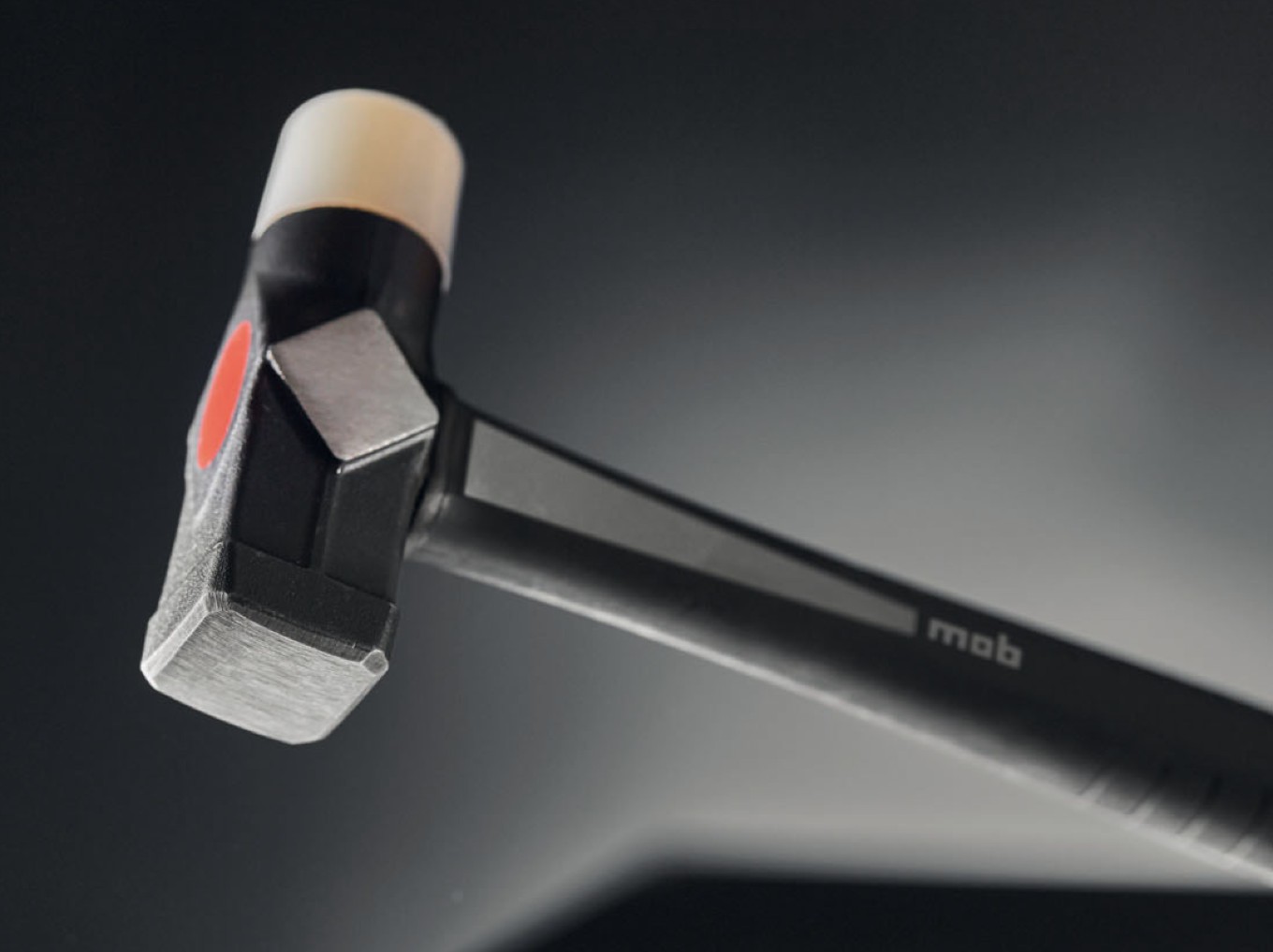
2022, Mob invents the hammer with nylon tip.
Very different from a metal-tipped mallet, the nylon-tipped hammer has the weight and power of a Riveter. A "real" hammer in its own right, with the qualities of safety and unbreakability for which MOB is renowned. A unique and patented design.
MOB, file leader
Incorporated into our know-how in 1952, files are one of the flagship tools of the MOB range.
They are recognized for the great longevity of their cut.
Their design secret, a steel heavily loaded with carbon (1.3 to 1.4%), alloyed with chromium to obtain a powerful bite. At each casting, we check the chemical composition of the steels and perfectly control the quenching. A crucial operation for the quality of the cut and to reach hardnesses of 65±2 HRC.
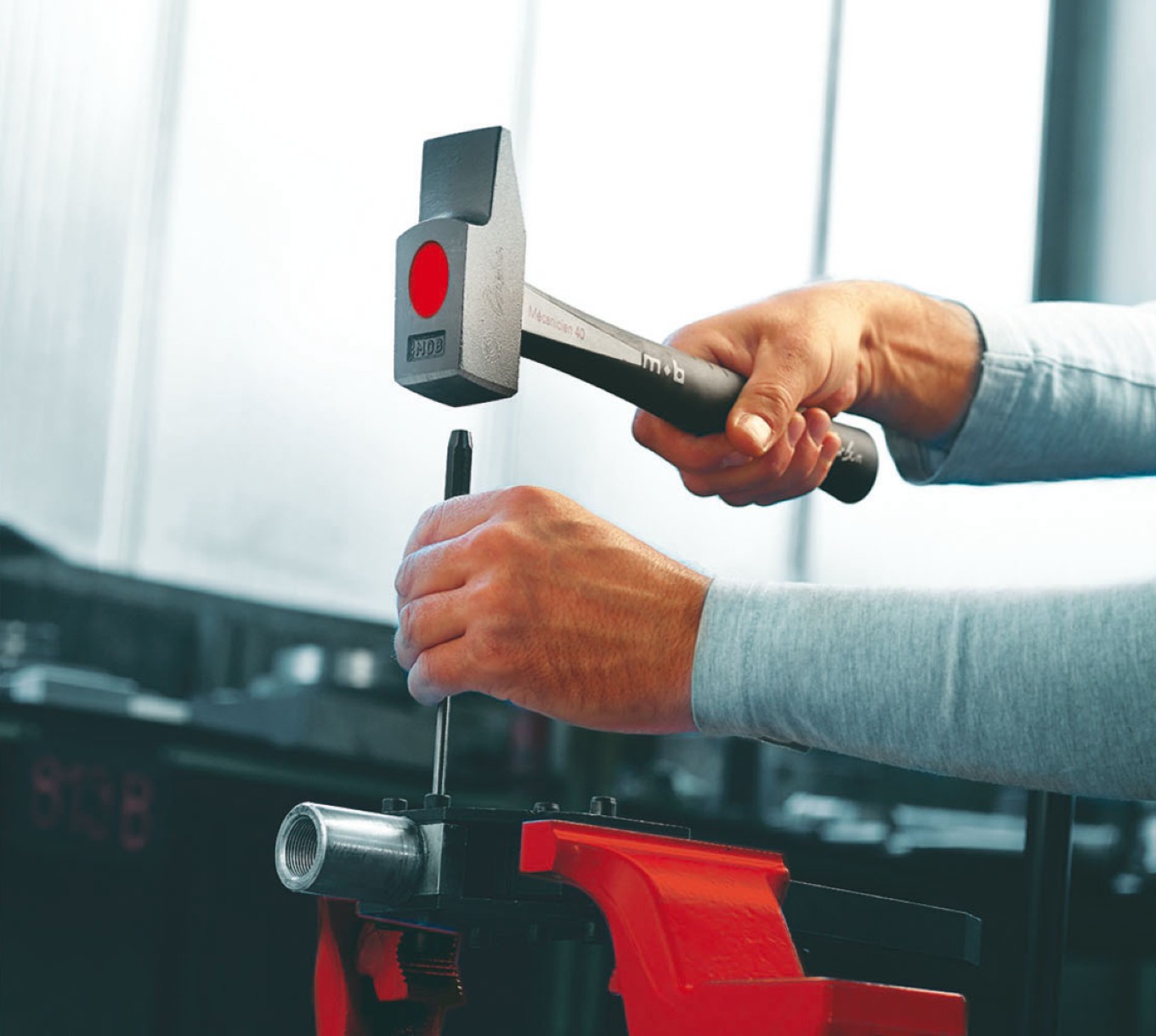
In 1963, Charles Moulin invented the riveting hammer and made it a world reference.
Initially used by mechanics,the French riveting hammer offers power and precision to its users. Today in the hands of all types of technicians, it is used for strong and precise strikes
The unique shape of its head, invented by Charles Moulin in 1963, has become the benchmark shape for hammers in France. Typically French, it surpasses the technical performance of German, English or American shapes.
The innovation
« The innovation represented in 1963 by the definitive shape of the French riveting hammer also lies in the center of gravity of the hammer. The asymmetrical shape of the head has been designed in such a way as to offset this center of gravity both in relation to the handle - to attenuate the transmission of vibrations to the hand - and also slightly behind, in order to cause a rebound effect which accompanies the operator's arm during repeated keystrokes.
The shape of the handle has also been particularly meticulous, because ergonomics is necessary for the precision of the strike, and the "whip" - the refined zone above the operator's hand - ensures the good "nervousness" of the hammer. All of these MOB innovations, have become a standard that we are still proud of today. It encourages us to always move forward and continue to innovate. »
Thibaut Moulin, CEO.
At MOB, R&D ideas are responses to the challenges we see in the field.
« When we think about new tools, new trolleys for example. We think of transport, which is the main difficulty for mobile maintenance. We think of the weight, the storage of tools to reduce trips to and from the truck, and also quite simply the noise of the wheels on the ground! Because we know this job. We practice it every day!
I come from the field, from the world of machine manufacturing, repair. I have at MOB a function of designer and user in the R&D team.
By practicing the profession of our own customers on a daily basis, I can bring ideas and bring up the difficulties that we encounter, especially in terms of comfort of use and ergonomics. »
Jean-Jacques Fabre, technical and R&D manager.
MOB, our history since 1920
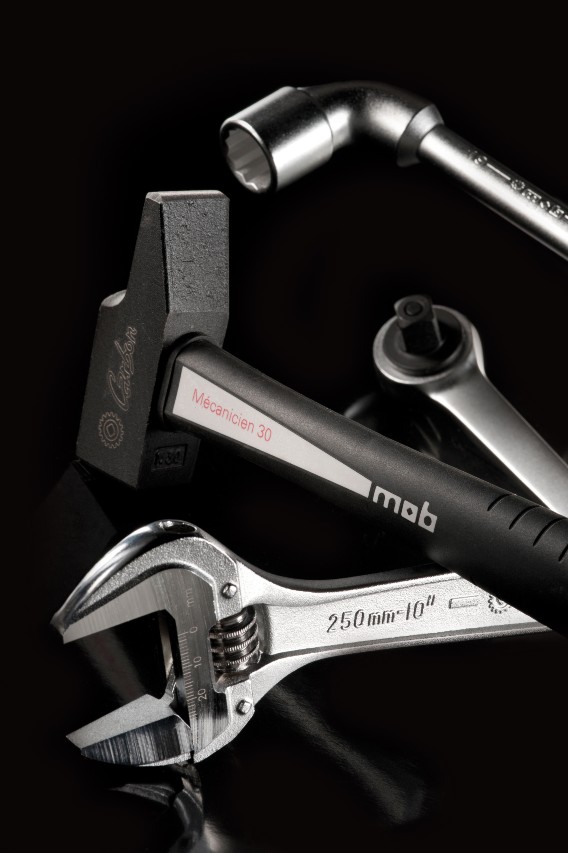
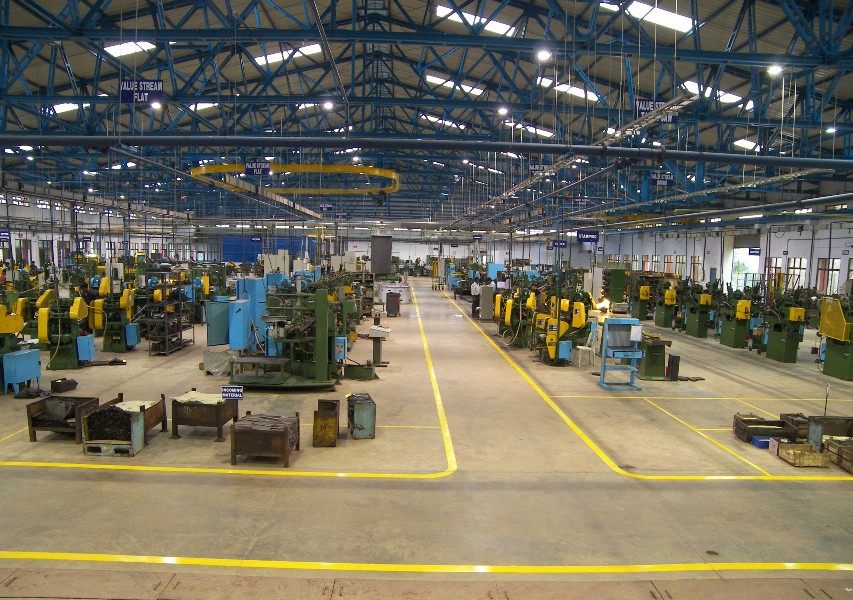
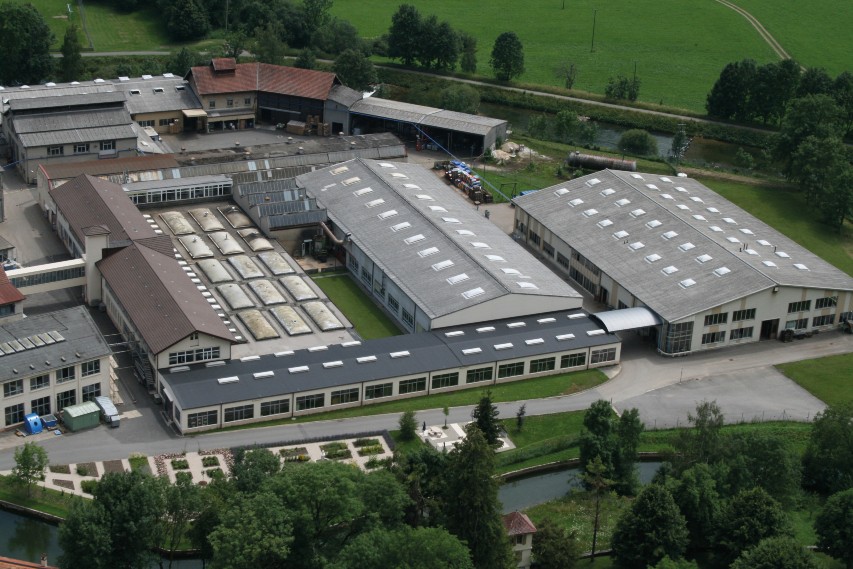
The company and its subsidiaries have 320 employees and 3 production sites, in France and in Europe. With the primary policy of manufacturing tools in its own workshops.
Over the years and the work of the R&D team, many functional or technical innovations have emerged, while retaining the ancestral know-how of forging and the very precise mastery of quenching.
In the industrial supplies market, MOB has been able to develop partnerships with major accounts, such as Areva and the SNCF.
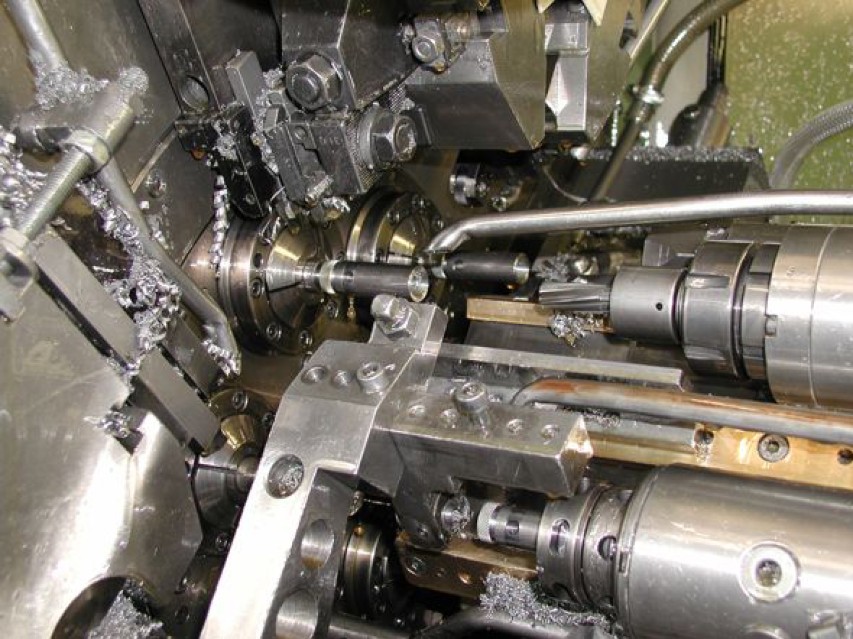
Schröder integrates MOB and completes its ranges of tool holders, extractors and screw bits.
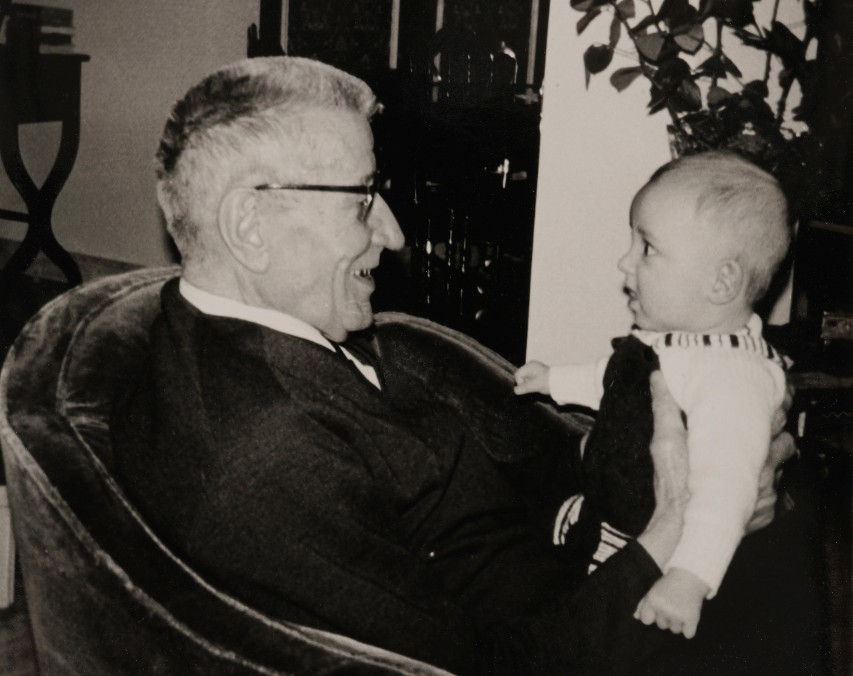
Arnaud and Thibaut Moulin, the great-grandsons of the founder, take over the family history.
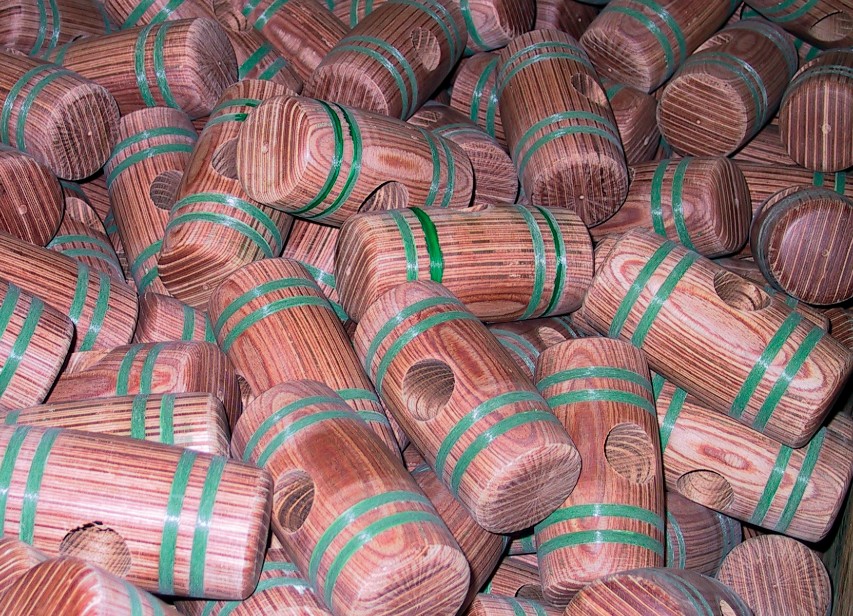
MOB integrates the manufacturer Dynachoc, inventor of the fiberglass laminated compressed wood mallet.
This know-how maintained by the MOB factory remains a reference for the aeronautical industry.
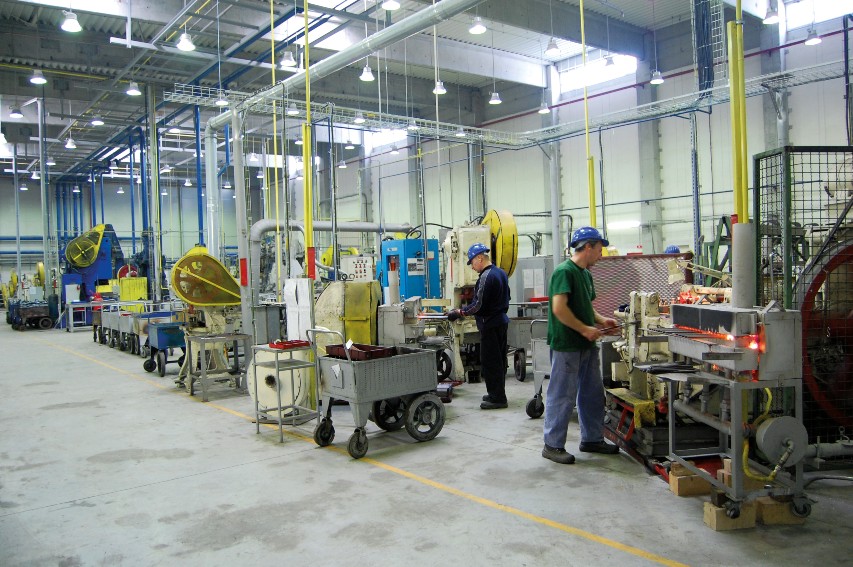
MOB joins IUS, leader in hand tools in Romania and blacksmith since 1833.
Generalist in tools, IUS brings its know-how to wrenches, pliers, screwdrivers, sockets and storage systems.
This is a major shift for MOB, both for the deployment of its know-how and its range of tools, and for the development of its production capacity, with the IUS factory.
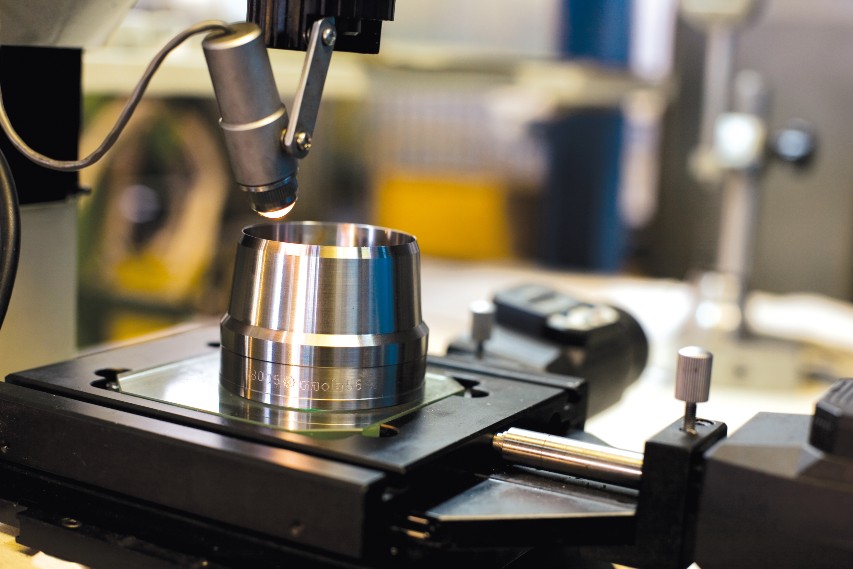
Mekanix, a specialist in gasket cutting for industry, joins MOB.
Peddinghaus, German hammer manufacturer and European leader, joins the group.
MOB integrates the leader of files and rasps in France, the company Talabot.
MOB takes over Forges Brunon, manufacturer of broaches and chisels for building and mechanical professionals.
Charles Moulin is 33 years old. Without training, he learned “on the job” the trade of blacksmith in a large factory in the Saint-Etienne region. With 4 of his colleagues, he decided to create a company whose function was "the manufacture of all hammering tools, and more generally, of all forged objects and various tools and all commercial and industrial operations relating thereto".
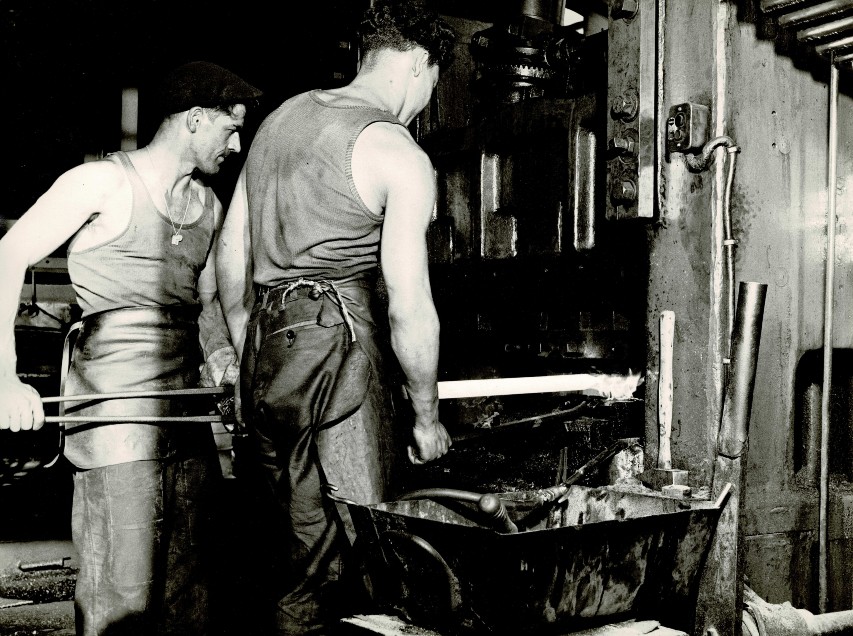
The factory then includes a free forge workshop, still present in the MOB factories, then quickly 5 imposing steam hammers. Of different weights, they make it possible to shape a piece of steel (previously heated) to the desired shape, by striking it several hundred times.
A process that requires expertise and accuracy, to model the piece piece after piece, and thus create forged pieces, all unique.
MOB signs an exclusive distribution partnership in France with Vallorbe, the world's leading Swiss manufacturer of precision files.
Suffering from leukemia at the age of 47, Claudius must ensure the sustainability of the company, which has become an SME with a hundred employees, with production recognized throughout France. His son Charles, then 26 years old, quickly completed his studies and joined the company.
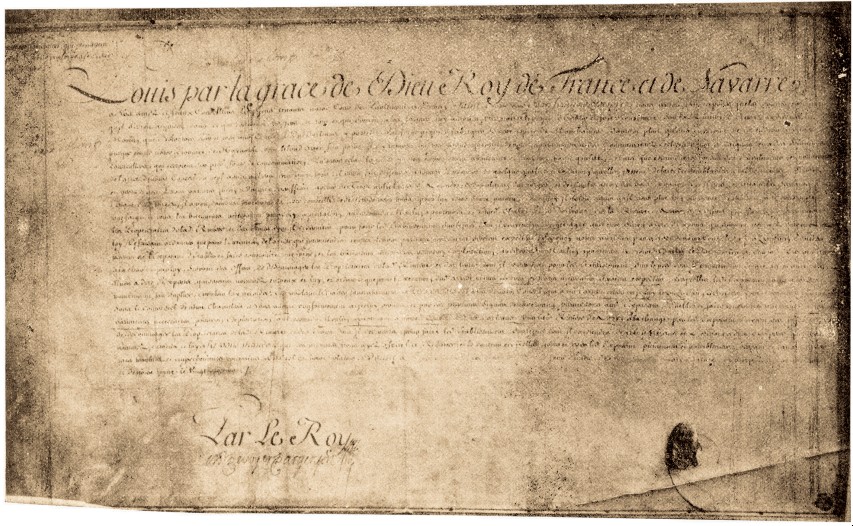
MOB integrates into its company the Forges de Milourd, founded in 1743 by order of King Louis XV in order to arm his kingdom against the Austrian Netherlands (today Belgium).
After the manufacture of weapons, the Forges de Milourd moved towards the production of tools, in particular agricultural tools, then hammers.
With the Milourd forges, MOB has access to a new production process and made a tremendous technological leap: press forging.
Some workers, in particular the blacksmiths, left the North to settle in Le Chambon, at MOB. There, they train MOB workers in this new stamping forging technology.
Once mastered, large series of several thousand parts are launched in production, considerably increasing stocks and on the other hand reducing the cost price of the manufactured products.
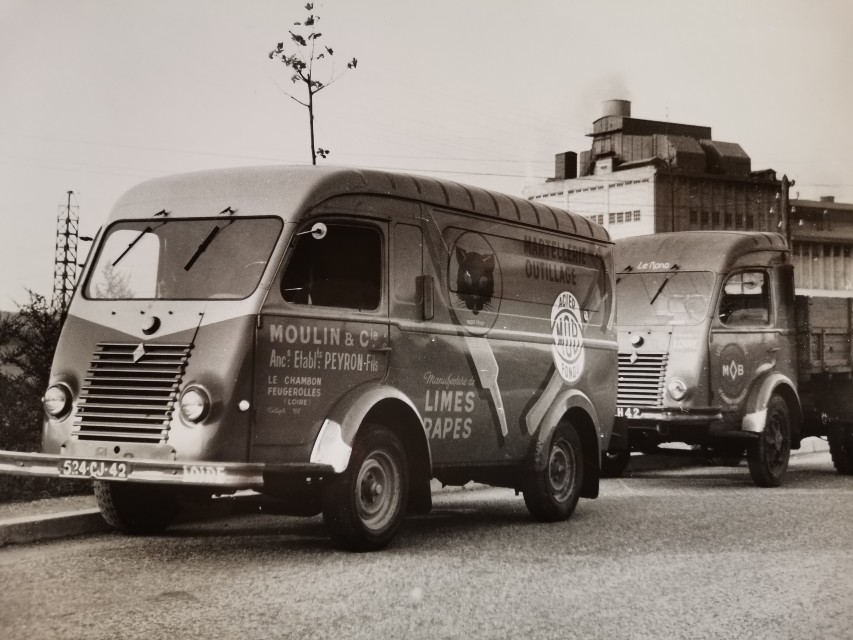
The lime adventure begins...
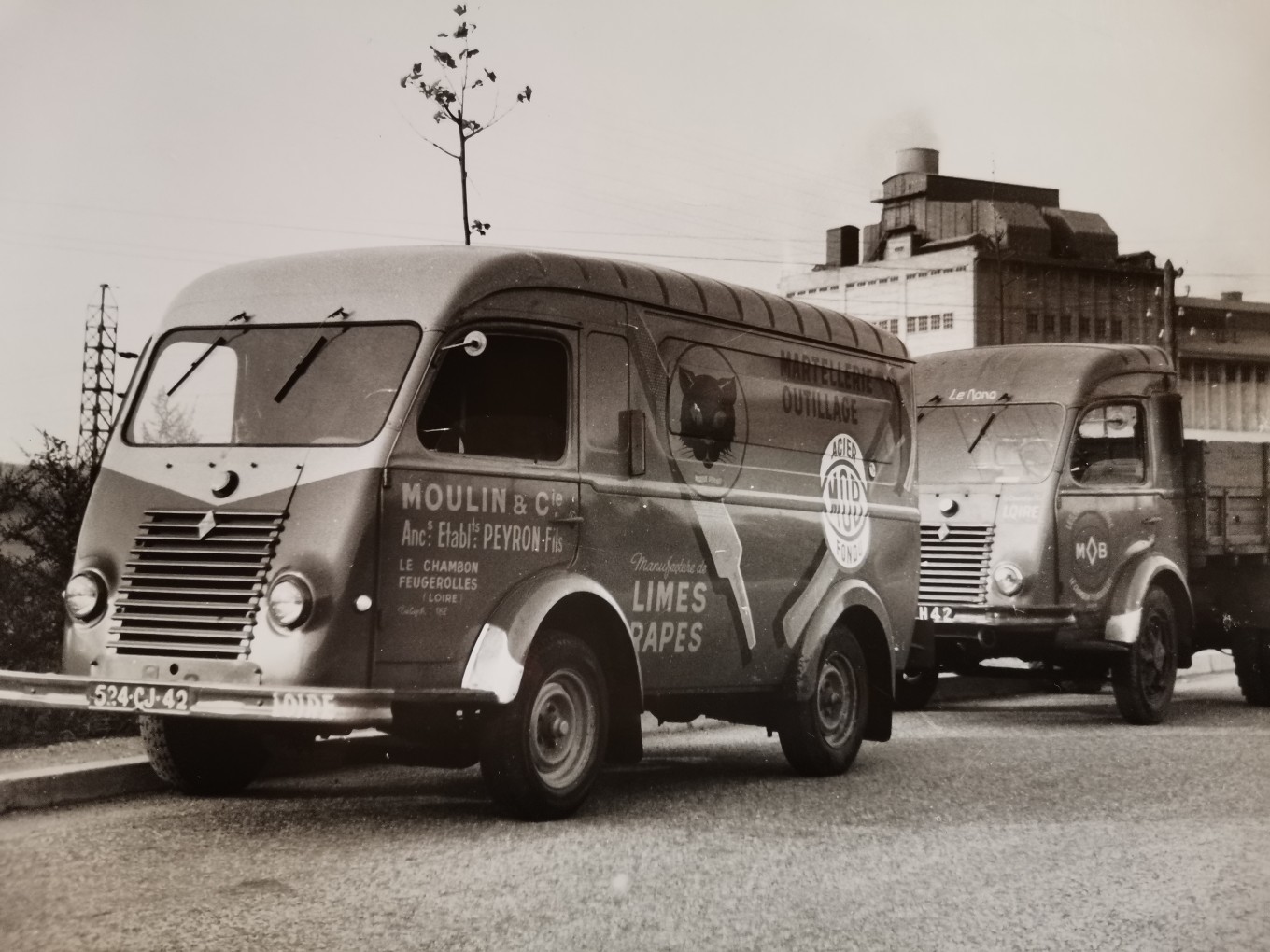
MOB integrates limes into its know-how by acquiring the Peyron establishments.
The company gradually developed its manufacturing techniques and unfolded its potential in 1982 by acquiring Talabot, the leader in files and rasps in France.
File-cutting technology and mastery of cyanide quenching put MOB products at the forefront of quality.
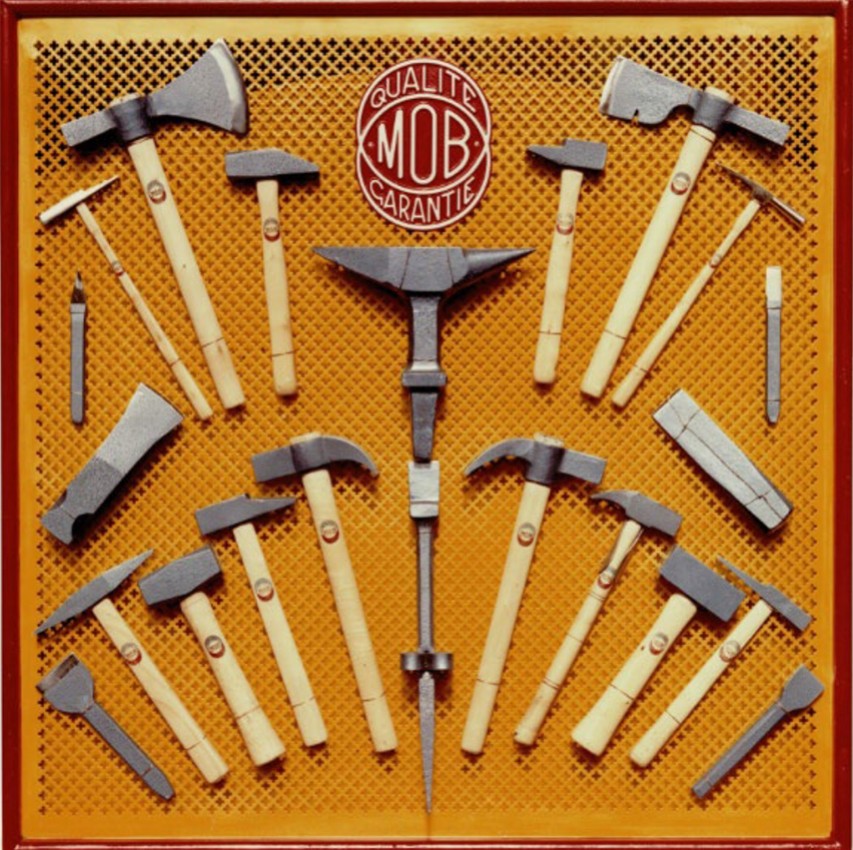
The company changes its corporate name and becomes “Moulin Blanc, successors of F. Rivet et Cie and of Durand Blanc et Cie”.
The company affixes its trademark on its products, M for Moulin, B for Blanc: "M.B". Gradually, the central point becomes an “O” for “Outillage” and “M.B” becomes… MOB!
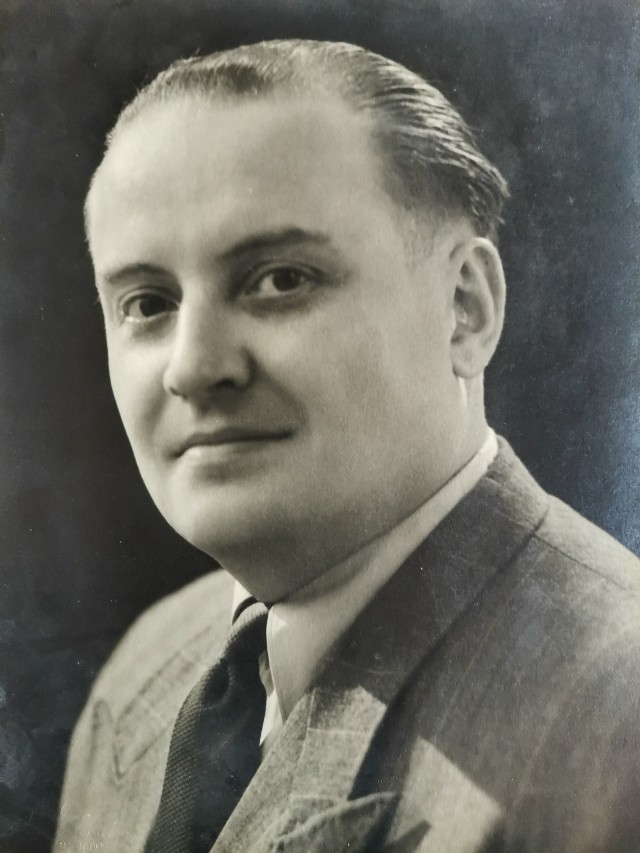
Claudius Moulin, known as Claude, took over the reins of the company from his father at the age of 25, worn out by a trying career as a blacksmith.
Where his father started off self-taught, he has a solid technical training as a blacksmith, a graduate of the Etienne Mimard high school in Saint-Etienne.
Claude is young and enterprising. Endowed with a strong personality, he is both authoritarian and very appreciated. Thanks to his energy and his ingenuity, he will straighten out the company, then close to filing for bankruptcy, and keep its 20 employees active.
Charles Moulin and Martin Blanc co-manage and take over the business of the company.
During the 1930s, they made hammers, winkles, winkles, heaps, pincers, sledgehammers… tools intended for blacksmiths, farriers, locksmiths, quarrymen, miners, boilermakers, tinsmiths, coachbuilders…